How to Make Turkish Coffee: A Complete Brewing Guide
Traditional Turkish coffee brewing demystified—what equipment you actually need, cost comparisons, and where to find authentic beans and cezve in Australia and New Zealand.
BrewedLate Coffee
Turkish coffee is made by boiling finely ground coffee with water and sugar in a cezve until it foams, then serving it unfiltered in small cups where the grounds settle. This centuries-old method produces a thick, aromatic brew with a distinctive layer of foam on top.
Sounds intense? It is. And it's also one of the most flavorful, concentrated coffee experiences you can make at home.
Here's what I learned after diving into Turkish coffee: The technique matters more than the equipment. But the right equipment makes the technique dramatically easier.
Let me walk you through what you actually need, what it costs, and how to source everything in Australia and New Zealand.
Shop coffee beans in Australia
Live picks from specialty roasters in our database
Compare prices, roasters, and brew guides across the full platform.
See more coffeesWhat Makes Turkish Coffee Different?
Before we get to equipment, understand what you're making:
Ultra-fine grind: Finer than espresso. Like powder. This isn't negotiable.
Boiled, not brewed: You're boiling coffee grounds directly in water. No filter. No press. Just heat, water, and coffee.
Served with grounds: The coffee settles in your cup. You drink the liquid on top and leave the grounds at the bottom.
Strong and concentrated: Similar caffeine to espresso, but with a thicker texture and more intense flavor.
Ritualistic: Turkish coffee is sipped slowly from small cups. This isn't a grab-and-go drink.
The History Behind Turkish Coffee in Australia and New Zealand
Turkish coffee holds a unique place in coffee culture. UNESCO recognized Turkish coffee culture as an Intangible Cultural Heritage of Humanity in 2013—and for good reason. This brewing method dates back to the 16th century Ottoman Empire, making it one of the oldest coffee preparation methods still practiced today.
In Australia and New Zealand, Turkish coffee has found a dedicated following among specialty coffee enthusiasts. While our coffee cultures are dominated by Italian espresso traditions, Turkish coffee offers something distinctly different: a slower, more contemplative coffee experience that emphasizes conversation and connection.
Why Turkish coffee matters for AU/NZ coffee lovers:
- Taste heritage: Experience coffee as it was prepared centuries before espresso existed
- Unique flavor profile: The unfiltered brewing extracts oils and compounds that filtered methods miss
- Cultural connection: Join a global tradition that spans from Istanbul to Melbourne's Turkish communities
- Conversation starter: Few brewing methods generate as much curiosity when you serve them to guests
Sydney's Auburn and Lakemba neighborhoods, Melbourne's Brunswick and Coburg, and Auckland's Mt Roskill all host vibrant Turkish communities where authentic Turkish coffee culture thrives. These areas are your best bet for finding genuine equipment, beans, and even traditional coffee houses where you can taste properly prepared Turkish coffee before attempting it yourself.
The Essential Equipment (And What It Actually Costs)
1. Cezve (or Ibrik)—The Turkish Coffee Pot
This is the only piece of equipment that's truly essential.
What it is: A small, long-handled pot with a wide bottom and narrow top. Usually copper or stainless steel.
Why it matters: The shape creates the thick foam (köpük) that defines Turkish coffee. A regular pot won't foam the same way.
Cost in AU/NZ:
- Budget copper-plated: $15-25 (online via eBay, Amazon AU)
- Solid copper (handmade): $40-80 (specialty Turkish shops, Etsy)
- Stainless steel: $25-45 (easier to maintain, no patina)
Sizes: Measured in demitasse cups (each holds about 60-70ml)
- 1-cup cezve: Solo brewing
- 2-cup cezve: Most versatile for beginners
- 4-cup cezve: Hosting guests
Where to buy in Australia:
- Turkish grocery stores in Sydney (Auburn, Lakemba) and Melbourne (Coburg, Brunswick)
- Online: Koko Black, Etsy AU, eBay AU
- Specialty coffee shops sometimes stock them
Where to buy in New Zealand:
- Mediterranean food stores in Auckland (Mt Roskill, Sandringham)
- Online: Mighty Ape NZ, Trade Me, international shipping from Australia
My recommendation: Start with a 2-cup stainless steel cezve ($25-35). Easier to clean than copper and makes enough for you plus a guest.
2. Coffee Grinder (The Right Grind is Critical)
Turkish coffee requires powder-fine grounds. Most home grinders can't do this.
Your options:
Option A: Buy pre-ground Turkish coffee ($12-18/250g)
- Easiest solution for beginners
- Check Turkish grocery stores or order online
- Common brands: Kurukahveci Mehmet Efendi, Selamlique, Najjar
Option B: Ask your local roaster
- Many specialty roasters will grind beans to Turkish-fine on request
- Buy fresh, grind Turkish-fine, use within 1-2 weeks
- Cost: Same as whole beans ($15-25/250g for specialty)
Option C: Manual Turkish coffee grinder ($30-80)
- Traditional brass hand grinders (search "Turkish coffee grinder" on eBay AU)
- Slow but satisfying
- Gives you control over grind size
Option D: Electric burr grinder with Turkish setting ($150-400)
- Breville Smart Grinder Pro can do Turkish grind (around $250 AU)
- Only worth it if you're already buying a grinder for other methods
Cost reality check: If you're just trying Turkish coffee, buy pre-ground. If you're brewing multiple times a week, invest in a grinder.
3. Coffee (What Beans to Use)
Traditional Turkish coffee uses Arabica beans, medium to dark roast, sometimes with added cardamom.
What to look for:
- Medium to dark roast
- Arabica or Arabica blend
- Fine grind (if buying pre-ground)
Where to buy in AU:
- Turkish grocers: Kurukahveci Mehmet Efendi (classic choice, $12-15/250g)
- Specialty roasters: Ask for beans suitable for Turkish coffee
- Online: Koko Black, Etsy, Amazon AU
- Supermarkets: Some Coles and Woolworths stock Turkish coffee in international sections
Where to buy in NZ:
- Mediterranean markets in Auckland
- Online: Raro Coffee, Kokako (local roasters that can grind to Turkish-fine)
- Import: Order from Australian suppliers (add $10-15 shipping)
Cost per cup: $0.40-0.70 depending on bean quality
Flavor note: Traditional Turkish coffee often includes cardamom. Start without it. Add 1-2 crushed cardamom pods per cup once you've mastered the basic technique.
How to Make Turkish Coffee (Step-by-Step)
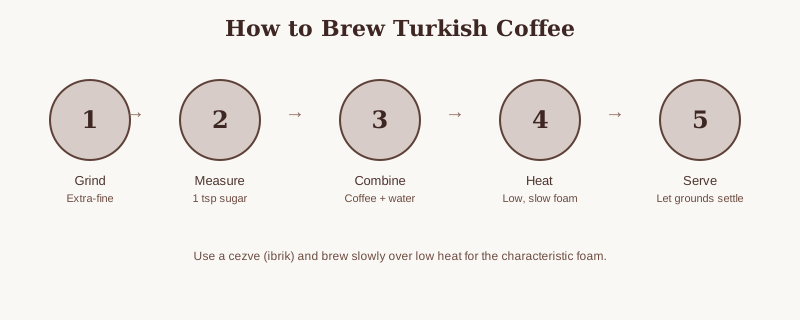
Now that you have equipment, here's the actual process.
What You Need (for 2 servings):
- 2 demitasse cups (or small espresso cups)
- 2 heaping teaspoons (12-14g) Turkish coffee
- 2 cups cold water (measured using your serving cups)
- Sugar (optional: 1 tsp per cup for medium sweetness)
- Cezve
- Small spoon
The Process:
Step 1: Measure water Fill your serving cups with cold water and pour into the cezve. This ensures you make exactly the right amount.
Step 2: Add coffee and sugar Add 1 heaping teaspoon of Turkish coffee per cup. Add sugar now if using (sugar isn't added after brewing).
Step 3: Stir once Stir gently to combine coffee, sugar, and water. Then don't stir again.
Step 4: Heat slowly Place cezve on low-medium heat. Turkish coffee needs slow, gentle heating. This is where patience matters.
Step 5: Watch for foam After 3-4 minutes, you'll see foam (köpük) forming on the surface. This foam is crucial—it's the signature of properly made Turkish coffee.
Step 6: Remove just before boiling As soon as the foam rises and starts approaching the rim, remove from heat. Don't let it boil over.
Step 7: Distribute foam Use a spoon to scoop foam into each serving cup, distributing evenly.
Step 8: Return to heat Place cezve back on heat and let it foam up again (another 20-30 seconds).
Step 9: Pour Slowly pour coffee into cups, including any remaining foam.
Step 10: Wait Let coffee sit for 1-2 minutes so grounds settle to the bottom.
Total time: 8-10 minutes
Common Mistakes (And How to Fix Them)
Mistake 1: Boiling too fast
- Problem: No foam, bitter taste
- Fix: Lower heat. Turkish coffee needs slow, gentle heating.
Mistake 2: Wrong grind size
- Problem: Weak coffee or gritty texture
- Fix: Use powder-fine grounds. If buying pre-ground, look for "Turkish" or "extra fine" on package.
Mistake 3: Stirring during heating
- Problem: No foam formation
- Fix: Stir only at the beginning. Don't touch it while heating.
Mistake 4: Boiling over
- Problem: Mess, loss of foam, burnt coffee
- Fix: Watch closely. Remove from heat the moment foam rises.
Mistake 5: Adding sugar after brewing
- Problem: Doesn't dissolve, ruins texture
- Fix: Add sugar before heating. Turkish coffee is sweetened during brewing, not after.
Troubleshooting Guide: When Your Turkish Coffee Isn't Right
Even experienced brewers encounter issues. Here's how to diagnose and fix common problems:
No Foam (Köpük) Forming
Possible causes:
- Heat too high—foam dissipates before you can capture it
- Coffee too old—stale coffee loses foam-producing compounds
- Wrong grind—too coarse won't create proper foam structure
- Over-stirring—agitation breaks foam formation
Solutions:
- Reduce heat to lowest setting and extend brewing time
- Use coffee roasted within 2-4 weeks
- Verify grind is powder-fine (test between fingers—should feel like flour)
- Stir only once at the very beginning
Coffee Tastes Burnt or Bitter
Possible causes:
- Heat too high—scorched coffee grounds
- Left on heat too long—over-extraction
- Old coffee—oxidation creates off-flavors
Solutions:
- Use lowest heat setting possible
- Remove from heat immediately when foam rises
- Store coffee in airtight container away from light
- Consider buying smaller quantities more frequently
Weak, Watery Taste
Possible causes:
- Insufficient coffee—most common beginner mistake
- Grind too coarse—under-extraction
- Water quality—mineral content affects extraction
Solutions:
- Use 1 heaping teaspoon per demitasse cup (don't skimp)
- Verify ultra-fine grind consistency
- Try filtered water if tap water is very soft or very hard
Gritty Texture in Mouth
Possible causes:
- Drinking too soon—grounds haven't settled
- Pouring too aggressively—stirs up sediment
- Grind inconsistent—coarse particles escape settling
Solutions:
- Wait full 2 minutes after pouring before drinking
- Pour slowly and gently along cup edge
- Invest in better grinder for consistent particle size
Cost Analysis: Is Turkish Coffee Worth It?
Let's compare Turkish coffee to other home brewing methods.
Initial equipment investment:
- Turkish setup: $40-60 (cezve + pre-ground coffee)
- French press setup: $30-50
- Pour-over setup: $40-70
- Espresso machine: $300-1000+
Ongoing costs (per cup):
- Turkish coffee: $0.40-0.70
- French press: $0.30-0.60
- Pour-over: $0.35-0.65
- Espresso: $0.50-0.90
Café comparison:
- Turkish coffee at café: $5-7
- Home Turkish coffee: $0.40-0.70
- Savings: $4.30-6.60 per cup
Break-even: After 8-12 cups, you've covered your equipment costs.
Bottom line: Turkish coffee is one of the most economical ways to make café-quality coffee at home. Lower equipment costs than espresso, similar intensity.
Alternative Methods (If You Don't Have a Cezve)
Can you make Turkish-style coffee without a cezve?
Sort of. But it won't be quite the same.
Option 1: Small saucepan
- Use your smallest pot
- Follow the same process
- You'll get less foam but similar taste
- Cost: $0 (you already own this)
Option 2: Butter warmer
- Small, flared shape works better than a regular pot
- Available at kitchen stores ($12-20)
- Better foam than a saucepan
Real talk: If you're making Turkish coffee more than a few times, just buy a cezve. The $25 investment transforms the experience.
Serving Turkish Coffee (The Traditional Way)
Turkish coffee isn't rushed. Here's the cultural context:
Serve with water: A small glass of cold water cleanses the palate before drinking.
Serve with something sweet: Turkish delight, dates, or a small piece of chocolate balances the intensity.
Drink slowly: Sip from the top. Stop before you reach the grounds at the bottom.
Fortune telling: Some people read the grounds (tasseography). Flip the empty cup onto the saucer, let it cool, and interpret the patterns. More ritual than truth, but fun.
The Beans That Work Best
After testing different roasts, here's what makes the best Turkish coffee:
Roast level: Medium to dark. Light roasts work but lack the traditional deep, rich flavor.
Origin: Turkish coffee traditionally uses beans from Yemen, Ethiopia, or Brazil. But any quality Arabica works.
Freshness: This matters. Stale coffee shows its flaws in Turkish coffee because nothing is filtered out.
Recommended AU/NZ options:
- Pre-ground Turkish: Kurukahveci Mehmet Efendi (traditional, reliable)
- Specialty roasters: Ask for Ethiopian or Yemeni beans ground Turkish-fine
- Experiment: Try your favorite local roast ground ultra-fine
Is Turkish Coffee Stronger Than Espresso?
In terms of flavor intensity: yes. In terms of caffeine: roughly the same.
A typical Turkish coffee serving (60-70ml) contains 60-70mg caffeine—similar to a single espresso shot.
But the thick, unfiltered body makes it feel stronger. You're consuming more of the coffee (including oils and fine particles that would normally be filtered out).
Start Here
If you want to try Turkish coffee this week:
- Buy a 2-cup cezve ($25-35)—check Turkish grocers or order online
- Buy pre-ground Turkish coffee ($12-15/250g)—Kurukahveci Mehmet Efendi is a safe bet
- Follow the process above
Total investment: $40-50 Time to first cup: 10 minutes
After 5-10 attempts, you'll get a feel for the foam timing and heat level. That's when Turkish coffee goes from "interesting experiment" to "part of your routine."
Where This Fits in Your Coffee Rotation
Turkish coffee isn't your daily driver. It's:
- Weekend ritual coffee when you have time to focus
- After-dinner coffee that doubles as dessert
- Cultural experience coffee when hosting friends
- Bold flavor coffee when you want intensity
If you want fast morning coffee, stick with pour-over or French press. But when you want to slow down and actually taste your coffee? Turkish coffee delivers.
Next Steps
Once you've mastered basic Turkish coffee, try:
Add cardamom: 1-2 crushed pods per cup for traditional spiced coffee Experiment with origins: Ethiopian beans give fruity notes, Brazilian beans are nutty and smooth Try different roasts: Medium vs. dark completely changes the flavor profile Host a coffee tasting: Make Turkish coffee alongside espresso and pour-over to compare
Related Brewing Guides
Explore other coffee brewing methods to expand your home barista skills:
- How to Make Coffee: 6 Methods That Save Money and Taste Amazing - Compare Turkish coffee with French press, pour-over, AeroPress, espresso, and cold brew
- V60 Pour-Over Brewing Guide: Complete New Zealand Method - Learn the clean, bright alternative to Turkish coffee's intense body
- AeroPress Coffee Guide: Perfect Brewing for New Zealand - A portable, versatile option for coffee on the go
- How to Make Plunger Coffee: Complete NZ Guide - French press offers full body similar to Turkish but with easier cleanup
- Cold Brew Coffee Guide: Summer Brewing for New Zealand - Smooth, low-acid alternative to hot Turkish coffee
- Espresso at Home: Beginner's Guide for New Zealand - Compare espresso's concentrated extraction with Turkish brewing
Equipment & Technique Resources
Master the tools and techniques for better Turkish coffee:
- Best Coffee Grinder 2025: AU/NZ Buying Guide - Find grinders capable of the ultra-fine Turkish powder consistency
- Best Coffee Scales 2025: Budget to Premium - Precision measurement for perfect Turkish coffee ratios
- How to Grind Coffee Beans: 7 Methods Without a Grinder - Alternative approaches for achieving Turkish grind fineness
- Complete Coffee Brewing Guide NZ - Master fundamental brewing principles that apply to all methods
Coffee Freshness & Storage
Keep your Turkish coffee beans at peak quality:
- How to Store Coffee Beans: Complete Freshness Guide - Preserve beans for optimal ultra-fine grinding
- How Long Do Coffee Beans Stay Fresh? Data-Driven Guide - Understand freshness timelines for Turkish brewing
Coffee Origins for Turkish Brewing
Discover bean origins that shine in Turkish preparation:
- Single Origin Coffee: Flavors & Selection Guide - Why Turkish brewing highlights origin characteristics
- Ethiopian Coffee: Yirgacheffe, Sidamo & Harrar Regions - Traditional Ethiopian beans for authentic Turkish coffee
- Colombian Coffee: Regional Varieties & Flavors - Colombian origins in traditional preparation
Cost & Value Analysis
Understand the economics of Turkish coffee:
- Coffee Price Comparison Australia: Total Cost Calculator - Equipment and bean pricing analysis for home brewing
Ready to perfect your Turkish coffee technique? Start with quality coffee storage practices and precise brewing measurements for the best results.
Sources and References
- Turkish Coffee Culture and Heritage — Traditional Turkish coffee preparation methods and standards
- Specialty Coffee Association — Extraction principles for ultra-fine grinding applications
Frequently Asked Questions
How do you make Turkish coffee?
What equipment do you need for Turkish coffee?
What coffee grind for Turkish coffee?
Can you make Turkish coffee without a cezve?
Is Turkish coffee stronger than espresso?
Where can I buy Turkish coffee in Australia?
Related Articles
Coffee Grind Size Chart: Micron Guide for Every Brew
Coffee grind size chart with exact micron ranges for espresso, French press, pour-over, and cold brew. Fix bitter or sour coffee with the right grind.
How to Brew Colombian Coffee: Complete Regional Guide
Colombian coffee is forgiving to brew, but regional varieties respond differently to brewing methods. Learn region-specific techniques for optimal extraction.
How to Make Plunger Coffee: A Complete NZ Guide
Master the art of plunger coffee with our comprehensive New Zealand guide. Learn brewing techniques, ratios, and discover the best NZ coffee beans for your perfect cup.
Brew Coffee Without a Machine: 7 Emergency Methods
Stranded without a coffee maker? Discover 7 proven emergency brewing methods using household items you already own. From strainer pour-over to cowboy coffee, ranked by taste and ease.