Home Coffee Roasting Hub: A Complete Beginner to Advanced Guide
Master home coffee roasting with our complete hub. Learn equipment selection, green bean sourcing, roast profiles, first crack, software, and logging.
Home coffee roasting is the process of heating green coffee beans until they develop the flavors, aromas, and color we associate with drinkable coffee. Roasting at home gives you control over freshness, roast level, and origin selection that no store-bought bag can match.
This hub connects every home roasting topic we cover on BrewedLate. Whether you are choosing your first roaster, sourcing green beans in Australia or New Zealand, learning to hear first crack, or refining profiles with software, the spoke articles below contain the detailed steps.
What You'll Learn
- Why roast at home — Cost savings, freshness, and control over flavor
- Choosing a roaster — Air vs drum, entry-level vs prosumer, and which features matter
- Sourcing green beans — Where to buy, what to look for, and beginner-friendly origins
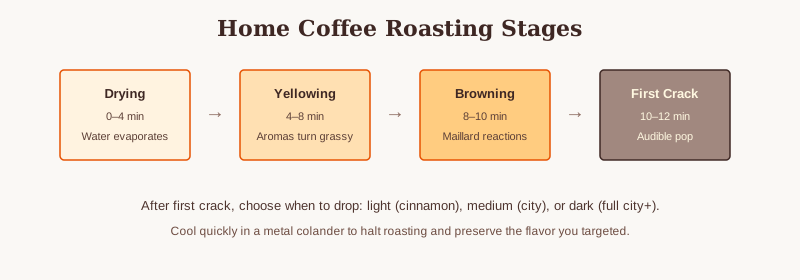
- Roast stages — Drying, yellowing, browning, first crack, and development time
- Roast profiles — What they are, how to log them, and how to repeat great roasts
- Software and logging — Roast analyzers, log templates, and Kaffelogic alternatives
- Troubleshooting — Common defects and how to fix them
Should You Roast Coffee at Home?
Home roasting is not for everyone. It requires upfront investment, attention to detail, and a tolerance for some burnt or uneven batches while learning. But the payoff is significant: coffee roasted within days of brewing, customized to your equipment, and usually cheaper per kilogram than buying roasted beans.
Start with our beginner's guide to home coffee roasting if you are still deciding whether to commit. It covers the real costs, time requirements, and equipment options without the marketing hype.
Choosing a Home Coffee Roaster
The right roaster depends on your budget, batch size, and how much control you want. Air roasters are fast, affordable, and great for learning. Drum roasters offer more even heat distribution and larger batches but cost more and take longer to master.
- Best Home Coffee Roaster: Expert Buying Guide — Top-rated machines, features, and buying advice for Australian and New Zealand home roasters
- What Is a Coffee Roaster? — How roasters work and the mechanics of heat transfer
Sourcing Green Coffee Beans
Green bean quality matters more than any roaster. Fresh, properly stored green coffee can taste excellent even on basic equipment, while stale or poorly processed beans will always underperform.
- Where to Buy Green Coffee Beans in Australia & NZ — Trusted suppliers, pricing, and shipping tips
- What Is Coffee Beans Made Of? — Bean composition and how it changes during roasting
Understanding Roast Stages
Every roast moves through the same physical stages. Learning to recognize them by sight, sound, and smell is the foundation of repeatability.
- First Crack in Coffee Roasting — What it sounds like, what it means, and why it controls your roast
- Roast Profiles for Coffee — Light, medium, and dark roast characteristics
- Light Roast vs Dark Roast Coffee — How roast level changes flavor, body, and caffeine perception
- Coffee Roast Date Explained — How freshness changes after roasting
Roast Profiles, Logging, and Software
Once you can roast consistently, the next level is controlling the profile. Software and log templates turn guesswork into repeatable recipes.
- Roast Profile Management: Complete Guide — How to design, record, and adjust profiles
- Coffee Roast Log Template — A free template plus a better digital alternative
- Green Coffee Inventory Tracker — Free spreadsheet for stock, origin data, and remaining weight
- Coffee Roasting Software: A Complete Guide — Features to look for and popular options
- Coffee Roast Analyzer: Evaluate & Perfect Your Roasts — Using data to improve consistency
Equipment-Specific Roasting Workflows
Some roasters come with their own ecosystems, profile libraries, and software. These guides help you get the most out of specific machines.
- Kaffelogic Nano 7 Profiles — Complete library and download guide
- Kaffelogic Studio Alternative — Roast tracking without the clunky desktop UI
- Nucleus Link (NCT) Profiles Explained — Packs, levels, and how to choose
Troubleshooting Common Home Roast Defects
Bad roasts usually fall into a few predictable categories: baked, scorched, underdeveloped, or uneven. Most are fixed by adjusting heat, airflow, or batch size rather than buying new gear.
- Why Does My Coffee Taste Bitter? — Bitterness can come from roast development as much as brewing
- Why Does My Coffee Taste Sour? — Underdeveloped roasts often taste sour or grassy
- How Long Do Coffee Beans Stay Fresh? — Storage and degassing after roasting
Conclusion
Home coffee roasting rewards patience. The first few batches may be uneven, but once you learn to control heat and time, you can produce coffee that rivals many commercial roasters. Start with a forgiving origin, log every roast, and use first crack as your anchor. Over time, you will develop profiles that match your taste and brewing method exactly.
Plan and log your next home roast
Track green coffee, plan each batch, and log roast results in BrewedLate so every roast teaches you something for the next one.
Related Articles
- Home Coffee Roasting: Beginner's Guide
- Best Home Coffee Roaster: Expert Buying Guide
- Where to Buy Green Coffee Beans in Australia & NZ
- First Crack in Coffee Roasting
- Roast Profiles for Coffee
- Roast Profile Management: Complete Guide
- Coffee Roast Log Template
- Green Coffee Inventory Tracker
- Coffee Roasting Software: A Complete Guide
- Coffee Roast Analyzer: Evaluate & Perfect Your Roasts
- Kaffelogic Nano 7 Profiles
- Kaffelogic Studio Alternative
- Nucleus Link (NCT) Profiles Explained
- What Is a Coffee Roaster?
- Light Roast vs Dark Roast Coffee
- Coffee Roast Date Explained
- How Long Do Coffee Beans Stay Fresh?
Frequently Asked Questions
Is home coffee roasting worth it?
What equipment do I need to roast coffee at home?
Where can I buy green coffee beans in Australia and NZ?
What is first crack in coffee roasting?
What are roast profiles?
Related Articles
How Long Do Green Coffee Beans Last? Storage Guide for Home Roasters
Green coffee keeps its quality for 6 to 12 months in a sealed bag in a cool, dark cupboard, and longer in hermetic liners or the freezer. Here is how to store it, how to tell it is ageing, and how to buy so you never roast a stale bag.
NCT vs F-Series: Kaffelogic Profiles Compared by the Numbers
We measured all 8 F-Series and 24 NCT profile curves and compared them against 58 logged roasts. NCT profiles heat faster and call first crack about 10 °C higher, but they are not always the shorter roast.
Development Time Ratio on a Kaffelogic: 75 Roasts of Data
We checked the usual DTR rules against 75 logged Kaffelogic roasts. 86% of the variation in DTR came from which profile was loaded, and our best cups landed anywhere from 10% to 24%.
Kaffelogic Roast Levels in Degrees: What the Number Means
A Kaffelogic roast level is a position on a temperature ladder that every profile defines for itself. We read the ladder in 122 profile files: level 2 ends the roast anywhere from 209 °C to 229 °C.